Real-Time PCR (qPCR)
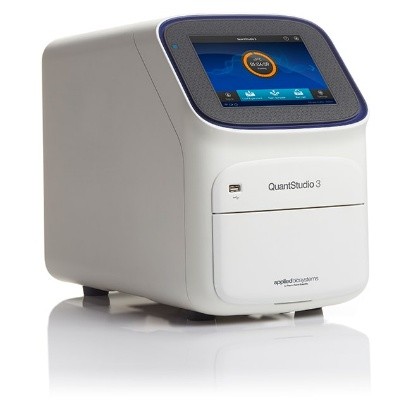
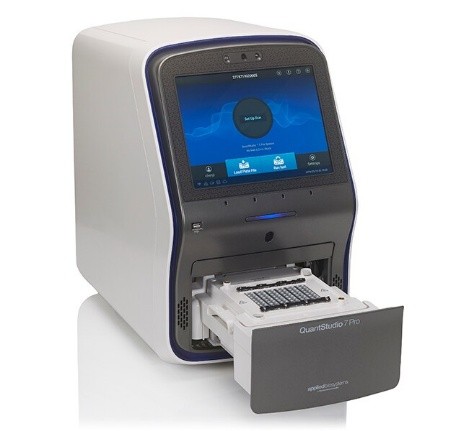
Given quick run times and cutting-edge optical technology, Thermo Fisher's RT-PCR (QuantStudio series) systems offer extremely precise, real-time nucleic acid detection and quantification.
Because of their dependability, sensitivity, and adaptable block formats, they are extensively utilised for high-throughput applications, research, along with diagnostics.
- QuantStudio 3 Real Time PCR
- QuantStudio 5 Real Time PCR
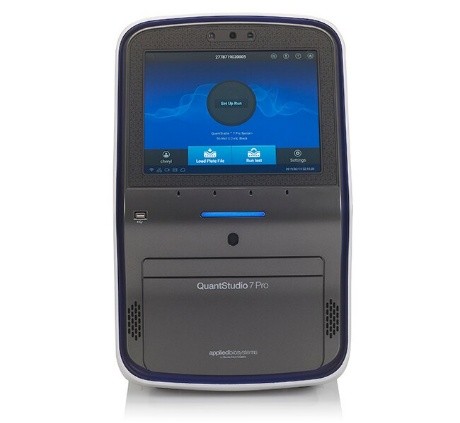
- QuantStudio 7 Pro Flex
Quality That Counts
With Thermo Fisher's QuantStudio Real-Time PCR platforms, which are built to provide accurate, repeatable, and sensitive nucleic acid analysis, one can have confidence in your outcomes on every run.
- Utilise cutting-edge optical technology and consistent thermal performance to achieve precise quantification.
- Reduce repeated runs as well as increase efficiency and reliability by producing outstanding outcomes on the very initial run.
- Assure reliable assay outcome via clever calibration features along with sturdy engineering.
Productivity That Liberates-
Optimise your molecular operations to ensure everybody involved can concentrate on science as well as diagnostics, which are the most important things.
| Multiplexing Capacity | 3–4 targets | 5–6 targets | 6+ colors, 21 filter combinations |
Block Format
| Quantstudio 3 | Quantstudio 5 | Quantstudio 7 Pro Flex |
|---|---|---|
| 96-well fast/standard block (0.1 mL or 0.2 mL) |
|
Interchangeable blocks:– 96-well fast/standard – 384-well – TaqMan™ Array Card (for high throughput) |
| Throughput |
|
|---|---|
| Sample Volumes |
|
| Optics System |
|
| Sensitivity |
|
| Data Management |
|
| Quality Assurance |
|
| Acoustic Noise Level |
|
| Connectivity |
|
| Power Consumption |
|
- Optimise turnaround time by using optimised assay protocols and quick cycling blocks.
- Make laboratory setup easier with cloud-enabled analysis and intuitive touchscreen interfaces.
- Adaptable plate layouts and customisable run options can boost lab productivity.
Savings That Empower-
Maximise the finest use of lab amenities with strong design and automation-ready features that lower expenses and boost productivity.
- Lower operating expenses and reagent utilisation with effective thermal cycling.
- Reduce hands-on time with automated data reporting, remote surveillance, and incorporated application.
- Increase system longevity with sturdy hardware designed for high-performance, constant operation.